

Good nutrition is essential to create a dense, healthy, beautifully green lawn, but people may wonder which numbers should you look for on a bag of lawn fertilizer.
Nutrient Confusion (brief nerd alert warning)
There are at least 14 essential nutrients that are taken up from the soil “bank account” daily in the specific amounts the turfgrass needs for optimum performance. If any of these nutrients are lacking, plant growth will be limited, no matter how much of the other nutrients are applied!
The 6 macronutrients, meaning they’re needed in the largest amounts by your turfgrass, are Nitrogen (N), phosphorus (P), and potassium (K) (the 3 numbers on a fertilizer bag in that order) are needed in the largest amounts by turf, while sulfur (S), calcium (Ca), and magnesium (Mg) are need in somewhat smaller amounts..
Equally essential but needed in much less amounts are 8 micronutrients: iron (Fe), manganese (Mn), zinc (Zn), Boron (B), copper (Cu), molybdenum (Mo), chlorine (Cl) and nickel (Ni). Other nutrients including sodium (Na), cobalt (Co), silicon (Si), selenium (Se), aren’t essential, have shown to work in ways that enhance plant growth.
Standard Lawn Fertilizer Recommendations
I usually recommend a 3-1-2 or 4-1-2 ratio of the numbers for turf fertilizing since that is approximately the ratio which turf takes up nitrogen, phosphorus, and potassium. Since most lawns contain adequate amounts of phosphorus (the middle number) I’m also fine with just applying nitrogen (first number) and potassium (third number).
These ratios are a good general guide for lawn fertilization with the exception that in the fall I prefer to raise the potassium level a little to help the turfgrass prepare for the cool season ahead.
These fertilizer ratios may be great for most lawns; however, YOUR lawn may already have too much or not nearly enough of one or more of these nutrients. Excesses, deficiencies, and imbalances can decrease turf health and growth. This is why the BEST fertilizer for YOUR lawn is what a recent soil test indicates is needed.
Soil Testing
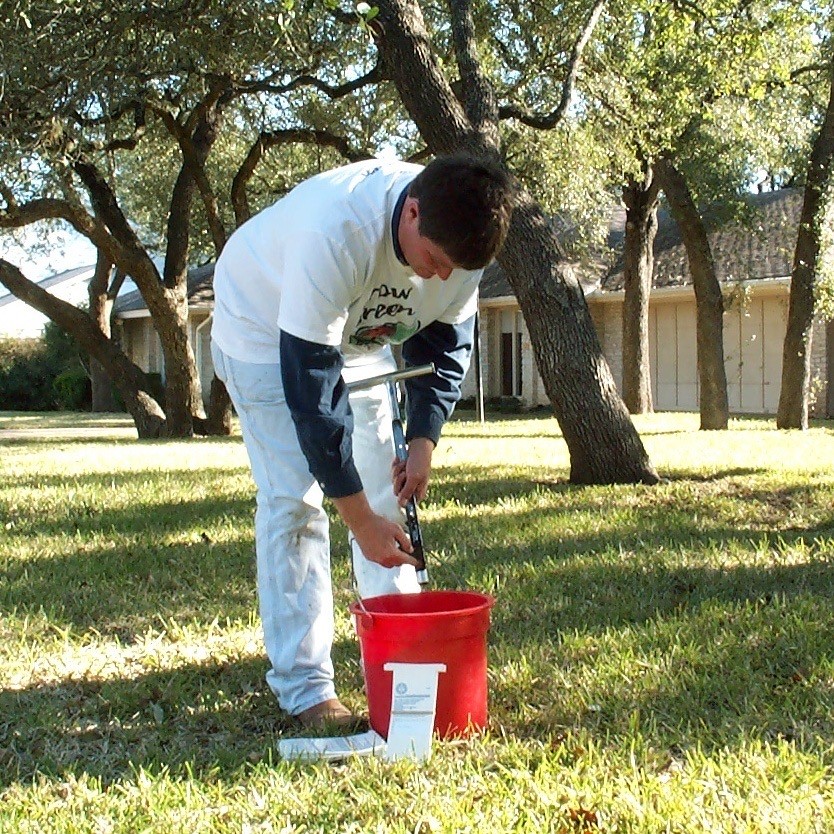
I know that it’s easiest to just choose a good fertilizer like the ones on my Lawn Care Schedule as well as a micronutrient supplement, but it’s best to test the soil in your lawn about every 5 years or so to KNOW what is in the soil bank account and what might be needed.
Download the Urban Soil Test form and follow the instructions carefully for taking and submitting a soil sample to the lab for analysis. A sample should represent the overall lawn, not just a spot where your dog happened to pause to poop a while ago!
The lab will tell you what is in the sample you send in, but it is up to you to make sure the sample accurately reflects the overall soil of your lawn.
